 Reviews

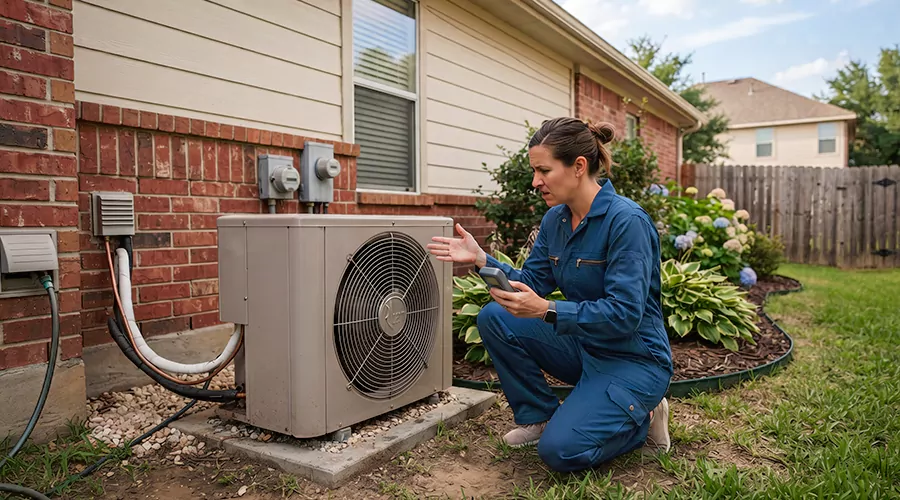
A home air conditioner not cooling can start with a $0 thermostat correction or end with a repair above $1000 in 2026. Common AC repairs often fall between $100 and $1000. Major compressor work can reach $1000 to $3000 or more.
Start with settings and airflow before assuming the sealed system has failed. A dirty filter can restrict airflow enough to reduce cooling. A refrigerant leak or compressor fault needs a different level of diagnosis. Ignoring weak cooling can raise energy use and turn a smaller fault into a larger repair.
Why Is My Air Conditioner Running but Not Cooling?
An AC can run without cooling when the thermostat is set wrong or airflow is restricted. Dirty coils can also block heat transfer. A refrigerant leak can reduce cooling output. A failed compressor can stop the refrigeration cycle even while the indoor blower keeps moving air. The thermostat set to “fan” can make the system sound active even when cooling is not being requested. Switch the thermostat to “cool” and use “auto” for the fan. Set the target below the current room temperature.
Next inspect the filter. Restricted airflow reduces the amount of warm indoor air that can cross the evaporator coil. ENERGY STAR notes that airflow problems can reduce system efficiency by up to 15 percent. If central air not cooling starts after weeks of weaker airflow, inspect the filter first. If the filter is clean and airflow remains weak, look for ice around the indoor coil area. Ice can point to an airflow problem or a refrigerant issue.
A dirty outdoor condenser can also keep heat trapped in the system. Leaves or debris around the cabinet reduce airflow across the condenser coil. The outdoor unit needs clear airflow so the system can release indoor heat outside. If HVAC not cooling appears only in a few rooms, duct leakage or a disconnected duct can be the cause. Cool air can escape before it reaches the affected register. This pattern is different from a whole-house loss of cooling.
How the Cooling Problem Usually Gets Worse?
Cooling problems often begin with a small loss of airflow and then progress into longer run times. Ice can form when airflow falls too far. Electrical parts may then work under extra stress. A refrigerant or compressor problem can push the final repair into four figures.
The table below uses 2026 published repair estimates in U.S. dollars. Local labor rates can change the final price.
| Stage | What you may notice | Likely action | 2026 typical cost |
|---|---|---|---|
| Early | Wrong thermostat mode or blocked vent | Correct the setting or open the vent | $0 |
| Airflow restriction | Weak airflow with a dirty filter | Replace the filter | Low DIY cost |
| Minor repair | System runs but an electrical start part fails | Capacitor replacement | $80 to $400 |
| Moderate repair | Water backup or control fault appears | Drain or thermostat repair | About $80 to $500 |
| Major repair | Cooling drops because refrigerant escapes | Leak diagnosis and repair | $200 to $1500+ |
| Severe failure | Outdoor unit cannot compress refrigerant | Compressor replacement | $1000 to $3000+ |
These ranges align with 2026 repair guides that place common AC work around $100 to $1000 or more. Capacitor replacement often stays below major component work. Compressor replacement sits near the high end because the part is central to the refrigeration cycle.
The AC repair cost can rise when a system keeps running with an unresolved fault. A weak capacitor may stop the outdoor fan or compressor from starting. A refrigerant leak can reduce cooling and force longer cycles. Early diagnosis matters most when the symptom changes quickly.
An air conditioner repair cost also depends on the failed part. A thermostat repair can run about $100 to $500. A fan motor can run about $300 to $800. An evaporator coil can reach $700 to $2500 or more.
10 Warning Signs Your AC Is Losing Cooling Capacity
Cooling loss is easier to diagnose when you watch for measurable changes instead of waiting for the house to become hot. Check room temperature and vent airflow. Watch run time. Look for ice or water. Listen for changes near the indoor unit or outdoor cabinet.
- The thermostat is set below room temperature but the room doesn’t cool.
- Supply air feels only slightly cooler than return air.
- Airflow from several vents is weaker than normal.
- One room stays warm while nearby rooms cool normally.
- The system runs much longer than it did under similar weather.
- Ice appears on the refrigerant line or indoor coil area.
- Water collects near the air handler or condensate drain.
- The outdoor fan doesn’t run during a cooling call.
- A hissing sound develops near refrigerant tubing.
- Cooling becomes weaker each week even after a clean filter.
When central AC not cooling happens together with ice, shut cooling off and let the coil thaw before more testing. Running a frozen system doesn’t solve the root cause. The next step is to find out why airflow or refrigerant conditions allowed freezing.
For an outdoor AC unit not turning on, check the breaker once. Don’t keep resetting a breaker that trips again. A repeated trip can point to an electrical fault that needs proper diagnosis.
A Safe DIY Diagnostic Test You Can Do Today
Use a simple temperature split test to see whether the system is removing a normal amount of heat from indoor air. Measure return air first. Then measure supply air near the indoor unit. A difference near 15 to 20°F is common for residential cooling systems. Choose a digital probe thermometer rather than an infrared surface thermometer. Run the AC for about 15 minutes with the thermostat calling for cooling. Place the probe in the return air stream and record the temperature.
Next measure a nearby supply register. Subtract the supply reading from the return reading. A return temperature of 78°F with supply air near 58°F gives a 20°F split. A low split doesn’t identify one exact failure. It can point toward weak heat removal. A very high split can occur when airflow is too low. Treat the reading as a screening test rather than a final diagnosis.
If central air conditioner not cooling comes with normal supply temperature but poor room comfort, inspect airflow distribution. Closed registers or duct leakage can keep cooled air from reaching the room. The cooling equipment can work while the house still feels warm.
What You Can Check Safely at Home?
Home checks should stay limited to controls and accessible airflow items. Confirm thermostat mode. Inspect the filter. Clear debris around the outdoor unit. Check visible vents. Stop if you reach refrigerant tubing or energized electrical parts because those areas are not safe DIY work.
- First confirm the thermostat is on “cool” with the fan on “auto.” Then replace a visibly dirty filter. ENERGY STAR advises checking or changing central HVAC filters every month.
- Walk outside and remove leaves or loose debris around the condenser. Keep the coil area open to air. Don’t bend the thin metal fins. Don’t open electrical panels.
- Check that supply registers are open. Make sure furniture is not blocking the return grille. If one room has poor airflow, compare that room with a nearby room.
- If HVAC not turning on follows a breaker trip, reset the breaker only once. Stop if it trips again. Repeated resetting can hide a fault rather than fix it.
- An air handler not turning on calls for a thermostat and breaker check. Don’t open the blower cabinet while power is on. Internal motors and capacitors can remain hazardous.
When to Call a Professional
Professional diagnosis is appropriate when cooling stays weak after basic settings and airflow checks. It is also needed for refrigerant leaks or repeated electrical trips. Frozen coils that return after thawing need deeper testing. Compressor faults require instruments that a normal homeowner does not have.
- Call when the supply air stays warm after a clean filter and correct thermostat settings.
- Call when ice returns.
- Call when the outdoor unit hums without starting.
- A repeated breaker trip is another clear trigger.
The technician can measure refrigerant pressure and electrical values. The technician can test capacitors and motors. Sealed-system work requires special handling because EPA rules require Section 608 certification for technicians who service equipment in ways that can release refrigerant.
In 2026, HVAC repair cost can range from around $100 for smaller work to more than $2000 for major parts. Compressors can cost about $1000 to $3000 or more. Evaporator coils can run about $700 to $2500 or more. If the diagnosis points to refrigerant loss, don’t treat a recharge as the whole repair. Refrigerant does not disappear during normal operation. The leak needs to be located before the system is restored to the correct charge.
How to Prevent the Same Cooling Problem?
Prevention focuses on airflow and clean heat-transfer surfaces because both directly affect cooling performance. Check filters often. Keep the outdoor coil clear. Have the system inspected before peak cooling season. These steps reduce the chance that a small restriction becomes a frozen coil or larger repair.
- Air conditioner maintenance starts with the filter. ENERGY STAR recommends inspecting or changing it monthly. Homes with heavy dust may need more frequent replacement.
- Seasonal HVAC care should also include evaporator and condenser coil cleaning when needed. Dirty coils reduce cooling ability and make the system run longer.
- AC unit maintenance is cheaper when the work stays preventive. A 2026 tune-up often falls near $70 to $200 in national pricing guides. That is far below the typical price of a compressor replacement.
- The AC maintenance cost is small compared with a major sealed-system repair. The HVAC maintenance cost can still change by market and system type. The AC tune up cost also changes with the inspection scope. The HVAC tune up cost is best compared against the price of one major failure rather than against doing nothing.
Conclusion
A home air conditioner not cooling should be checked in a fixed order. Start with thermostat settings and airflow. Measure the temperature split if you have a probe thermometer. Arrange professional help when the problem involves refrigerant or repeated electrical faults. This week, inspect your filter and clear the outdoor unit before a simple airflow problem becomes a larger repair.